











Submenu section
Strangers Among Us
 0 Comments
 By: Rabbi Rebecca Schorr
The holiday of Passover is our annual reenactment of the journey our ancestors took out of the land of bondage towards their destiny of freedom in their own land. Much of the meal concentrates on the meaning of slavery as well as the responsibility of freedom.
One of those responsibilities is reiterated over and over in the Tanach (Bible): “you shall not oppress the stranger.” Why? We are told that it is because we were strangers in the land of Egypt. In other words, from our own experience, we should know better than anyone else what it is like to be an outsider. The frequent repetition of the theme of welcoming the stranger signifies the importance of our obligation towards the vulnerable in our society. We are instructed not to wrong the stranger, but not doing harm to someone is not the same as welcoming him or her.
In Exodus 2:22, Moses’ first son is born.
And she [Tzipporah] bore a son, and he [Moses] called his name Gershom; for he said: ‘I have been a stranger in a strange land.’
So much did Moses feel set apart from others in his adopted country of Egypt that his son bore a name reflective of Moses’ discomfort. “A stranger in a strange land.”
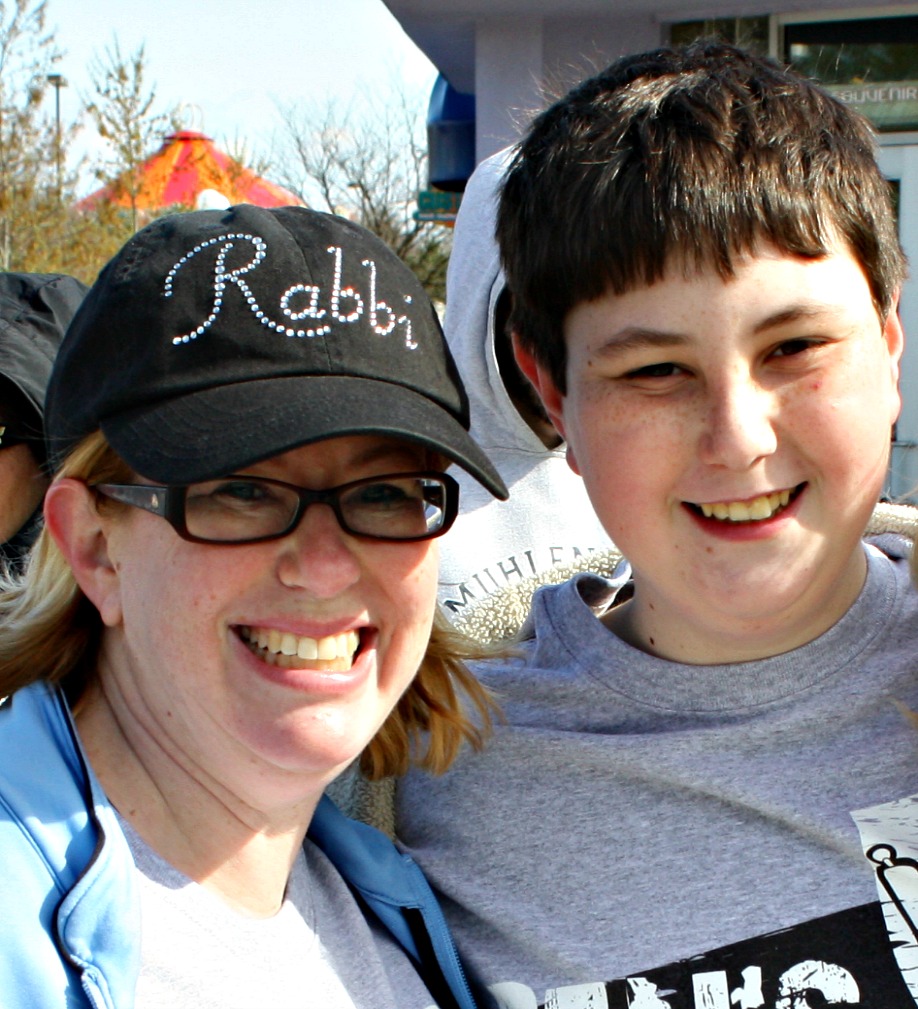
I think of this phrase every day as my son, Benjamin, walks into the house after school. As a teen on the autism spectrum, he maneuvers through his day without truly understanding the verbal and nonverbal social landscape. His reports of his social interactions bespeak of his continued confusion as one who is not fluent in the vernacular language and mores.
 Ben’s days are long. He expends a great deal of energy trying to figure out how to insert himself appropriately into conversations with his peers as well as how to participate in group activities. Things that require little effort for those who do not have social or developmental disabilities require intense concentration for Ben. Before I go to sleep, I peek in and watch my exhausted son as he slumbers. All signs of stress and anxiety are erased from his face, and I breathe a sigh of gratitude that he is able to escape, if ever so briefly, from the strangeness of his life.
How often do we come into contact with individuals who seem extraordinarily awkward? Or socially inept? Are we impatient with them? Do we ridicule them? How different might we treat them if we shift our perception?
Imagine that you are working on a project with someone. The instructions have been given several times. And the day before the due date, this individual asks for clarification (again) for something that has been explained in numerous emails.
It’s annoying. It’s aggravating. Infuriating, even.
So let’s reframe it: Let’s imagine this woman has a processing issue.
And that much of her life is spent not understanding what is expected of her.
That would be so hard, don’t you think?
That is how we welcome those who try to function in our strange land. By making allowances for all types of differences. By reframing situations in order to be more understanding. To be kinder. To be more gracious. Simply by remembering that we too were once strangers in a strange land.
Ordained by the Hebrew Union College-Jewish Institute of Religion, Rabbi Rebecca Einstein Schorr is a CLAL Rabbis Without Borders Fellow, a contributing author of The New Normal: Blogging Disability, and the editor of the CCAR Newsletter. Writing at her blog, This Messy Life, Rebecca finds meaning in the sacred and not-yet-sacred intersections of daily life. Engage with her on Twitter!
About the author Rabbi Rebecca Einstein Schorr is a CLAL Rabbis Without Borders Fellow, contributing writer to Kveller and The New Normal: Blogging Disability, and is the editor of the newsletter of the Central Conference of American Rabbis. She is a sought-after speaker with topics ranging from disability and inclusion to making the leap from a career-driven woman to stay-at-home mom without losing one’s mind.
Stay Included
To stay up to date on our most recent advocacy efforts, events and exciting developments, subscribe to our newsletter and blog!