














Submenu section

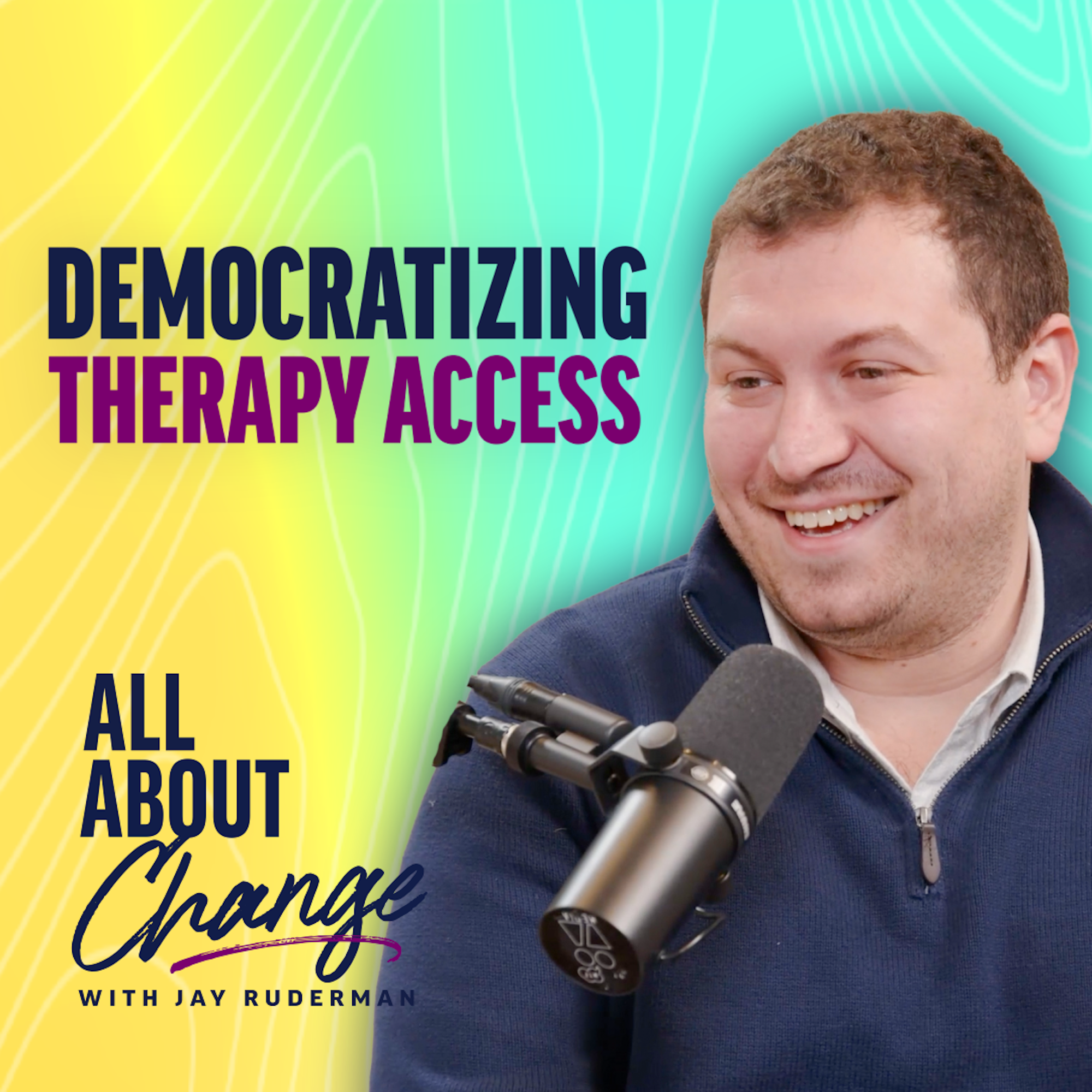
Phillip Schermer: Bringing mental health care to the masses
There are not enough therapists in America. And even when you can find one, it is hard to schedule an appointment. This is the case despite the fact that America also has a rising mental health crisis. More people are aware of their mental health needs, and more people are coming to need mental health support.
At the Ruderman Family Foundation, this is one of our tentpole issues, and we strive to facilitate changes in our communities that will provide better and healthier futures for those struggling with mental health.
That is why I’m so excited to be joined today by Phillip Schermer. Phillip is the founder of Project Healthy Minds, a non-profit startup building the world’s first digital mental health marketplace to democratize access to life-changing services, partnering with public figures to de-stigmatize mental health, and creating the first national standards for businesses to better support employee mental health.
Phillip and Jay discuss AI in the therapy space, the social and economic barriers standing between people and quality mental health care, and the stunning power of celebrity honesty around mental health struggles.
TRANSCRIPTION
Jay Ruderman:
Welcome to All About Change. Hey, All About Change listeners. It’s Jay here, and I wanted to tell you my book, Find Your Fight, is now available in 800 Walmart stores. In the book, I talk about my biggest successes and those of others and also failures as an activist, and my personal philosophy on how to make a difference. It’s the perfect gift for friends and family who care about making a positive change in our society. There are not enough therapists in America. And even when you can find one, it’s hard to schedule an appointment. This is the case despite the fact that America also has a rising mental health crisis. More people are aware of their mental health needs and more people are coming to need mental health support.
At the Ruderman Family Foundation, this is one of our main issues and we strive to facilitate changes in our communities that will provide better and healthier futures for those struggling with mental health. That’s why I’m so excited to be joined today by Philip Schermer. Philip is the founder of Project Healthy Minds, a nonprofit startup building the world’s first digital mental health marketplace to democratize access to life-changing services, partnering with public figures to de-stigmatize mental health and creating the first national standards for businesses to support better employee mental health. Philip Schermer, welcome to All About Change.
Philip Schermer:
Thrilled to be here, thanks for having me.
Jay Ruderman:
You must be coming off a high right now because just two months ago, you had your World Mental Health Day Festival. What are some of the standout moments that you had from that day?
Philip Schermer:
Yeah. Well, maybe I should wind it back first and give a little bit of the origin, because I think it’ll give texture for some of the highlights. Project Healthy Minds really began inspired by music. Six years ago, I was at a breakfast with two friends of mine who managed a bunch of well-known musicians, and they told me a story over breakfast that eventually inspired the creation of Project Healthy Minds, which was this. The artist that they became well known for is a hip hop artist by the name of Logic. And he released a song in April of 2017. The title of the song is the phone number of the Suicide Hotline, the 1-800 number, what’s now 988, but forever, and at the time was the 1-800 number. And the song was about Logic’s own struggle with depression, which is rooted in the fact that he’s biracial.
And so growing up, he always struggled with a sense of identity and belonging. And so the song was him coming out and talking about the issue. He didn’t think that the song would necessarily be a chart topper. Why would a hip hop artist rapping about depression be a number one hit? Well, that song ended up going seven times platinum. It was nominated for two Grammys, Song of the Year, and Music Video of the Year. But perhaps more important than the commercial success and what really inspired me was the day that song was released, the suicide hotline saw the second highest call volume in its history, behind the death of Robin Williams. A few months later, he performs that song at the MTV Video Music Awards. There’s a 50% spike in call volume to the hotline. A few months after that, he performs it as the closing set at the 2018 Grammys, there’s a 300% spike in call volume.
And then when we hit the one-year mark of the song release, April of 2018, the hotline published a report showing that call volume was up 30% year-over-year since the day the song had been released. And years later, there were studies about the impact and the number of people whose lives were saved by it. And so Chris and Harry told me this story and I was inspired by it. And I thought to myself, “It’s very unusual.” And the short version of where we landed on all of it was you have two enormous issues in mental health. I mean, you have many, as you know, in mental health, but you’ve got 65 million Americans with a mental health condition, 60% don’t get any form of care. And the first two barriers in the journey to accessing care are, one, people don’t feel comfortable talking about mental health, they feel a sense of shame.
Even if things are improving, people still feel a sense of shame so they put off seeking help. And then two, when they finally decide, they gen up the courage to go find mental healthcare, discovery is very difficult. Even if you are well-educated and well off and well networked, it’s hard to find the right care. And if you’re not those three things, it’s overwhelming. And so we realized that Logic Song was an amazing public health case study for how you expand the number of Americans accessing care because the song addressed both barriers. A role model was coming out, talking about his own mental health journey. It was creating the permission structure for others to do the same, de-stigmatizing the issue. And by making the title of the song the phone number of the hotline, it solved discovery, gave people somewhere to go to access care.
And so out of all of that, we basically realized, okay, well, if you could replicate those two core elements, partnering with culture makers to de-stigmatize mental health and making it easier to actually find care, you could help a lot more people access mental health services. In that framework, that’s the origin of the organization. In the context of looking at how you change public attitudes around mental health, one of the things that became very clear to us was that, you know how you have Pride Parade for LGBTQ+ rights and Broadway Cares for HIV AIDS and Race for the Cure for breast cancer? There was no equivalent for World Mental Health Day on October 10th every year. The day’s been around for decades and yet, there was no signature community event convening, focused on the day. And our view was that should change and we should lean into role models.
You asked the question, what were some of the highlights, who are the most interested people? The first person that comes to mind is Jonathan Haidt, author of The Anxious Generation. I think that anyone who is either under 35 or has kids is extremely interested right now in the role that technology is having on our own mental health. He was a standout, Katie Couric moderated that conversation, but there was a whole set of folks. There was someone named Rich Kleiman, for sports fans, who is Kevin Durant’s manager, that most people don’t necessarily think of male personalities in sports as the most vulnerable personalities. And Rich did an amazing job talking about his own journey, so there was a lot.
Jay Ruderman:
Let’s talk about Project Healthy Minds and as an aggregator. How you differentiate your organization from a for-profit like Talkspace or Better Health?
Philip Schermer:
The first is what you have across the mental health services space, is you have what people would call point solutions, a platform that has therapists on it, a platform that has psychiatrists on it, a platform that is about peer-to-peer support. It’s one category of mental health service, but a lot of Americans at the beginning of their journey, don’t know if they need a PhD, a PsyD, a licensed social worker. They don’t even know if they need therapy. Do they need to see a psychiatrist for medication? Should they be thinking about meditating, should they be journaling? Do they need an eating disorder service? And so the idea is there is a broad set of services that exist within this category of mental health. And it would be the equivalent of if you only had an open table, but it only had restaurants that offered Thai food.
If you love Thai, if you want Thai, that’s a great place to go. But if you actually might want to see all the options that exist, if you don’t even know what all the options are, then you need a broader view on it, so you need something that sits a layer above any one of these point solutions. And we’re set up as a nonprofit because a lot of people will ask me, “Well, you worked at BlackRock for eight and a half years. Why not set this up as a for profit? This could be a marketplace play.”
And the first question that I was grappling with when we were working on Project Healthy Minds was, if you believe that we are living in an era of rising populism around the world, if you believe that we’re living through a time where we’re on a 70 year decline of trust in all institutions, if we’ve been on a five or 10 year decline of trust in technology companies, started with big tech, I’d argue, sort of spilled over more broadly, if we’re living in an era of rising social consciousness around data privacy and data rights, then when you take an issue like mental health where there’s a stigma, people are so sensitive about how their data’s being used.
And so the question we had to answer was how the bar to earn and maintain trust, not just at the beginning, but over long periods of time, is incredibly high, how do we do that? How do you earn trust in a low trust environment? And it seemed to me there was no more profound thing you could do than to set up the corporation as a 501(c)(3) not-for-profit so that you would align the incentives of the platform to the people that you’re supposed to serve, so that it’s not organized around profit maximization, it’s organized around improving social outcomes. That’s how we came to start the organization.
Jay Ruderman:
I’m sure you have examples of people who come to Project Healthy Minds and they have the resources and they’re looking for the best resources. What happens when someone comes and they have a mental health issue, maybe a mental health crisis, but they don’t have the resources? What happens in that case?
Philip Schermer:
A few things. One is, it’s one of the reasons why, and this is what makes it a little bit different from the straight analogy to OpenTable or Resy, which is that there are also a number of mental health services that are offered by nonprofits in the platform. There’s also many services that accept Medicaid and Medicare. There’s a number of services that are, for example, there’s one that I’m thinking about that allows for Black men, a certain number of therapy visits for free before you have to pay. And so the idea is that you want to be a one stop shop that has all the different types of support. And I think there’s a couple of use cases that you might think about. One is the more straightforward use case, which is someone’s on Medicaid and so there’s a number of services that they can’t access. And so, how do you make sure that you have services in the platform?
And that’s exactly why that’s part of when we think about the sourcing of what services go on, we think about it that way. But the second is you can think about another example, which is somebody in rural Idaho who really wants to see a therapist in person and they want a PhD and they have a very narrow set of criteria that to them, don’t feel narrow. They feel like it’s what they need, right? And they want to see this person in person. Well, the wait might be three months, it might be six months.
And in the current environment that we operate in, the way that things are structured, it’s basically like if it’s a binary. It’s either you find that person or you have bupkis. And in my view, the answer should be, okay, well, if the person we’re trying to serve wants a PhD that they can go see in person, the wait might be a certain amount of time, but the answer shouldn’t be that they get no help in the meantime. It should be, “What’s the next best category of care that they could access now until they can visit?” And so that’s sort of how we think about it.
Jay Ruderman:
I want to get back to the issue that you mentioned about the cutback in services and how it’s becoming more difficult for people to access mental health, but there’s another issue I want to talk to you about. The need is so overwhelming. Do we have enough therapists, professionals who can deal and work with people with mental health issues in this country?
Philip Schermer:
No. Any sober analysis of the situation is that you basically have a pretty significant supply side issue, you don’t have enough providers in the country. So then you try to get into the details of, “Well, why don’t we have enough providers in the country?” There are a number of reasons, but one of them most fundamentally is that the way in which we compensate people who work in this space, the interesting thing is that for the vast majority of Americans who can’t afford to pay out of pocket for therapy, they don’t even experience exactly, they may not even know exactly what the insurer is paying the therapist for.
They might know what they’re paying out of pocket or what their copay is, but they may not know exactly what their therapist is getting paid. And so this isn’t an issue that necessarily every American interacts with every single day, but they have, I think, a broad understanding that it’s way too expensive to find care. That’s because we have the shortage of supply, and at the root of that is the reimbursement challenge.
Jay Ruderman:
I want to talk about an important issue that’s coming up in the issue of treating mental health, and that’s AI. There are tools out there right now where people are turning to AI to address mental health. And a recent Stanford study warned that AI-driven mental health tools can’t meet the standards set by human practitioners. And it doesn’t even consider people who use AI chatbots as therapists, which has led to a number of people dying by suicide. In fact, I was at a conference this morning and I heard some terrible stories about how, I don’t want to name the company, but a person was talking to an AI model.
In one case, the model taught the young person how to build a noose. In another case, the person who was considering suicide was advised by the bot not to speak to their parents, and the person subsequently died by suicide. AI is not going to stop. It’s here and it’s going forward and it’s not regulated. What do you think about that? You have these non-human sources and people are turning to them and talking to them and getting advice from them. And sometimes that advice is dangerous, they’re not human beings that they’re talking to.
Philip Schermer:
Yeah. I mean, the stories are heartbreaking. I feel like you can’t open the New York Times and not see another opinion piece from a parent who has lost a kid to suicide. I think that there’s a few things. One is, I mean, right now we’re living in this era of the Wild West on all of this. And it’s one of the reasons we have this clinical and scientific advisory committee that advises Project Healthy Minds and that determines, shapes the criteria, the screening criteria for which services we allow into the marketplace. We don’t have any of the AI chatbots that are trying to deliver therapy or whatnot in the platform today because we feel like it is way too early and it is the Wild West and there’s too many cases. I mean, these stories are heartbreaking. And by the way, I can’t imagine that the people who work at the AI companies intended for that to be the use case for it.
Jay Ruderman:
I don’t think it was thought about.
Philip Schermer:
Exactly.
Jay Ruderman:
I think they thought, “Well, this is a great…” I mean, maybe akin to social media.
Philip Schermer:
Totally.
Jay Ruderman:
“This is a great asset for society, it’ll help society.” And they didn’t think of the downside of the problems it could cause society.
Philip Schermer:
Totally. And I think that we are in the bottom of the first inning, or maybe even the top of the first inning, of figuring out what should that look like. Now, what’s interesting is there is the beginnings of work around regulating this stuff. Maybe three months ago, Illinois passed the law banning the use of AI in provisioning therapy services. And I think there’s a really interesting question around, first of all, what should the rules be, and then how should they be implemented? Should they be implemented state by state or should they be implemented at a federal level? And I think the reality is that no one really knows. And anyone who is out there saying definitively that it should be this way or it should be that way, I think that it is a little bit too early to be declarative.
I think that it’s important for the country that there’s lots of different policy approaches that we try until we figure out what works. And I don’t know today, but as we think about Project Healthy Minds, we’ve taken a very cautious approach to basically say, “Look, could there be some use case long term where machine learning is helpful for a category of people and a category of use cases with a certain set of safeguards?” Maybe, maybe. We don’t feel like the space is mature enough yet to be something that we add to the platform, but we think it’s something worth tracking. And I think that there need to be more safeguards, but I think that if you asked most people with specificity, “What do the safeguards need to be,” they’d be light on the details because the whole space is too new.
Jay Ruderman:
I don’t think government has figured out how to regulate it. And with your organization, obviously it’s something that you’re going to have to start to think about because it’s there and we’ll have to wait and see how it all works out.
Philip Schermer:
Totally.
Jay Ruderman:
One of the most interesting insights of Project Healthy Minds’ 2024 State of Mental Health survey was that just over half of the people surveyed reported that extreme weather events negatively impacted their mental health that year, even more reported that mass shootings negatively impacted them. These rates imply that lots of people who aren’t immediately impacted by these extreme events still suffer some mental health consequences from the shootings and negative effects from climate change.
I remember the Boston Marathon bombing and my office was 20 miles away, and someone who was working for me said, “I’ve been affected by that and I need to seek therapy.” At that time, I don’t think I really understood, but now so many years later, I get it. Can you talk about how our collective mental health is under siege by these events that hang over our country like a gray cloud?
Philip Schermer:
Yeah. Well, what you’re saying is resonant, because do you remember the Tree of Life mass shooting in 2018 in Pittsburgh?
Jay Ruderman:
Sure.
Philip Schermer:
That was my childhood synagogue. I got Bar Mitzvahed there, my younger brother got Bar Mitzvahed there. My childhood home is maybe five blocks away, knew a number of the victims. I wasn’t there that day, but I remember where I was. I was in Philadelphia, visiting a friend who was going to grad school. And even today, when I go back to Pittsburgh and I see the, they still have up, or at least as of a couple months ago when I was last there, they still have the fence up around the synagogue. And I wasn’t there that day. I had moved out of Pittsburgh 15, 16 years ago, yeah, that was hugely traumatizing, I mean, even to me, but surely even more to people in the community, even people who weren’t there that day.
And I think that if you broaden the lens on this and you say, “Okay, well, why do people feel a heightened sense of anxiety even from, whether it’s a mass shooting or a climate disaster or things that they’re not directly part of,” I think one of the through lines that connects it all is that we are living in this era of information overload. The 24/7 news cycle combined with the advent of the mobile phone and social media, the democratization of cameras onto everyone’s… Suddenly we’re all photographers. And the frictionless ability to share all of that content, not just with one person, but with everyone on the internet at any time of day, during any part of the year.
And I think what that means, and the amount of time that we spend consuming this content, I think is more than what human beings are capable of ingesting. And so I think if you open up your phone 50 times a day and you see entire towns on the Eastern Seaboard destroyed because of a hurricane or wildfires out west, destroying neighborhoods, or you see a mass shooting or you’re 13 years old and you hear a clip, you see a clip of a 10 year old in Connecticut during a mass shooting, those are extraordinarily traumatizing experiences even if you yourself were not there for any of them. And I think it’s part of the reason why I think we live in this era of anxiety, it is overwhelming for people and perhaps not the healthiest.
Jay Ruderman:
I want to get back to something that you talked about before. The current administration canceled $1 billion in grants that were aimed at improving mental health services in schools and their proposed 2026 budget aims to cut another $1 billion from substance abuse and mental health services administration. Does Project Healthy Minds have any projects that address these top down attacks on mental health services?
Philip Schermer:
Yeah. Project Healthy Minds does not have any federal contracts, is not the beneficiary of any of this stuff, so there’s no public funding that we are reliant on. But I think sort of my broader view on this issue is, I go back to the time in my life when I was spending every day working on economic policy. And in the root of economic policy, there’s a set of economic data about the country that is the lifeblood for how policymakers craft better policy to improve the country, how business leaders, CEOs decide where they’re going to place bets for running their own business, how the media knows how to report on what’s going on in the economy, how researchers and think tanks do original research that uncovers the economic impacts of different policy approaches, the lifeblood of all of that is data.
And it’s funny that we’re having this conversation now because in the news right now, there’s a lot of conversation around how even the inflation data is going to be delayed two weeks. But I go back to, in the first Friday of every month at 8:30 in the morning, you have the jobs report. And I remember during the height of COVID, there was a lot of conversation that even once a month wasn’t frequent enough for this unemployment data because the economy was changing so rapidly, and that we should perhaps be releasing data even more frequently than once a month. Well, if you analogize that to mental health, we should be so lucky to get data on a once a month cadence. We get data on a one year lag, over a year lag. Once a year, it’s more than a year out of date and it’s focused around suicide related data.
Now, there are 50,000 suicides a year in the United States, there are 65 million Americans with a mental health condition. If the focus of the data that’s being released by the federal government is around less than 1% of the population, it’s not the full picture of what we need. And it would be like releasing an unemployment report that is only about the agricultural sector and just saying, “Jay, you should just extrapolate that it’s the same in manufacturing and in technology services and in all these other areas.” And I think that there’s a sort of simple idea that you can’t manage what you don’t measure and this country does not measure mental health well enough.
And so I think one of the important areas, one of the areas that we’re focused on is, if you have a lot of people using a platform to find the right mental health services, you can aggregate and anonymize that data and then try to help public health officials and policy makers and researchers accelerate their own work based on a better understanding of what’s actually happening in the community. And I will give you a good example of this. If I think back to Tree of Life, if we had existed then, we would be able to see both in the days, weeks, months prior to the mass shooting in the zip codes that make up the Jewish community, Squirrel Hill around Tree of Life, on a daily, weekly, monthly basis, how many people are searching for mental health services?
What are the most common challenges people are facing, which services are they using? What’s actually helping improve their health outcomes over time? And then you’d be able to see in real time, a day later, a week later, a month later or seven years later, how does all of that change? And it may change differently for single parent households versus two parent households. It may have a different impact on kids at the time who were 10 versus kids who were 16 years old. It may have a different impact on women versus men. It may have a different impact on folks who were in their 60s than folks who were in their 40s.
Today, we do not have the national infrastructure to do that. If you were going to do that today, you would have to field a study, you’d have to know where there’s going to be a traumatic incident, you’d have to create a baseline beforehand, and then you’d have to fund it for a long time thereafter. And that’s just not scalable and not practical and it doesn’t happen that way. And so if we’re serious about better policy, then I think we also need better data and more data more often. And so in this moment when there’s a lot of changes happening from a policy perspective, that’s one of the reasons why we’re grateful that we’re not reliant on public funding to do the work that we’re doing, because I think it becomes more important that other people are able to help fill in the gaps.
Jay Ruderman:
Phil, I want to thank you so much. As someone who deals with anxiety, has dealt with depression, has children who are dealing with different mental health issues, I mean, it’s just so prevalent out there, I know how important this issue is. I really want to thank you. I think this is an important thing. I appreciate that you have dedicated your life to creating a nonprofit that’s trying to tackle a really large issue and help so many people. I really enjoy the conversation, so important. Thank you. And I wish you go from strength to strength.
Philip Schermer:
Well, thank you.
Jay Ruderman:
Thank you for being part of the All About Change community. We aim to spark ideas for personal activism, helping you find your pathway to action beyond awareness. So thank you for investing your time with us, learning and thinking about how just one person can make the choice to build a community and improve our world. I believe in the empower of informed people like you to drive real change, and I know that what we explore today will be a tool for you in that effort. All right, I’ll see you in two weeks for our next conversation, but just one small ask. Please hit subscribe and leave us a comment below. It lets us know that you value this content and it supports our mission to widely share these perspectives. If you’re looking for more inspiration, check out this next video. I chose it for you and I know you’re going to enjoy it. I’m Jay Ruderman. Let’s continue working towards meaningful change together.
Today’s episode was produced by Tani Levitt and Mijon Zulu. To check out more episodes or to learn more about the show, you can visit our website Allaboutchangepodcast.com. If you like our show, spread the word, tell a friend or family member, or leave us a review on your favorite podcasting app. We really appreciate it. All About Change is produced by the Ruderman Family Foundation.
Stay Included
To stay up to date on our most recent advocacy efforts, events and exciting developments, subscribe to our newsletter and blog!